
What Is ASD / VSD Device Closure?
This is a non-surgical way to close a hole in the heart — an ASD (between the upper chambers) or a VSD (between the lower chambers) — using a small device delivered by a catheter.
Why Is ASD / VSD Device Closure Done? — Indications
It is done to close an abnormal hole (a heart defect present from birth) that lets blood flow the wrong way and strains the heart and lungs.
Who May Need ASD / VSD Device Closure?
It is for children and adults with a suitable ASD or VSD that is causing symptoms or straining the heart.
Types / Variations of ASD / VSD Device Closure
ASD device closure
For a hole between the upper chambers (secundum ASD) with enough rim around it.
PFO closure
For a small flap-like opening, in selected patients after certain strokes.
VSD device closure
For selected holes between the lower chambers (muscular or perimembranous), depending on size and position.
Your cardiologist will tell you which type or technique is right for you after reviewing your reports.
Benefits of ASD / VSD Device Closure
It closes the hole without open-heart surgery, gives a quick recovery, and prevents long-term heart and lung damage.
How ASD / VSD Device Closure Is Performed
A catheter carries a folded “umbrella-like” device to the heart, where it is opened to plug the hole and stays permanently. It is done in the cath lab, with no chest cut in suitable cases.
Preparation Before ASD / VSD Device Closure
Preparation includes an echo (sometimes a special echo from the food-pipe) and the usual catheter-procedure preparation.
Tests Required Before ASD / VSD Device Closure
- 2D Echo — to check pumping (EF) and the valves
- TEE (echo from the food-pipe) — to see the valve or hole closely and rule out a clot
- ECG — to record the heart's rhythm on the day
- Blood tests — haemoglobin, kidney function (creatinine), blood sugar and clotting profile
- Infection screening (HIV, hepatitis B and C) as per hospital protocol
Your doctor will tell you exactly which tests you need — bring all previous reports, CDs and your medicine list.
Anaesthesia / Sedation Used in ASD / VSD Device Closure
Children usually receive general anaesthesia. Adults usually get local anaesthesia with sedation; general anaesthesia may be used if TEE guidance is needed during the procedure.
How Long Does ASD / VSD Device Closure Take?
Usually about 1–2 hours.
Hospital Stay / Admission for ASD / VSD Device Closure
Usually 1–2 days.
Risks & Possible Complications of ASD / VSD Device Closure
It is generally safe, with a rare risk of the device moving or rhythm problems.
Recovery After ASD / VSD Device Closure
The hospital stay is short (1–2 days) with a quick return to normal life; some medicines are advised for a few months.
Aftercare & Precautions After ASD / VSD Device Closure
- Take every medicine exactly as prescribed — never stop blood thinners on your own.
- Keep the puncture site clean and dry for 2–3 days; a little bruising is normal.
- Tell your dentist about your heart procedure — antibiotics may be needed before dental work, as your doctor advises.
- Children usually return to school within a few days — avoid rough play until the doctor allows.
- A repeat echo is done at follow-up to check how the valve or device is working.
- Keep every follow-up visit and bring your discharge summary and reports.
Success / Expected Outcomes of ASD / VSD Device Closure
When the hole is suitable, device closure succeeds in the large majority of patients. The heart's enlarged chambers usually return towards normal over the following months.
When to Seek Medical Help After ASD / VSD Device Closure
Contact us immediately — or go to the nearest emergency — if you notice any of these after going home:
- Chest pain, pressure or tightness — especially at rest
- Fainting, dizziness, or a very fast or very slow heartbeat
- Breathlessness, or swelling of the feet that is getting worse
- Fever, or redness, warmth or discharge at the wound
- Bleeding, swelling or increasing pain at the puncture site — press firmly on it and call us
- In a child — poor feeding, fast breathing, unusual sleepiness or bluish lips
ASD / VSD Device Closure — Questions Patients Ask
No. Suitable holes are closed through a catheter without opening the chest.
Yes. Heart tissue grows over it and it stays for life.
Yes — both children and adults with suitable defects.
At Prathmesh Cardiac Institute, NH-30, Amlidih Road, Deopuri, Raipur. ASD / VSD Device Closure is planned and performed by our DM Cardiology specialists in our own Cath Lab, with a 24x7 CCU for recovery. Call +91 77778 65621 to book a consultation.
Government health schemes and most insurance policies cover cardiac procedures. The exact cover depends on your scheme or policy, so our team checks it with you before the procedure and explains the costs clearly.
Why Choose Prathmesh Cardiac Institute for ASD / VSD Device Closure?
Experienced hands, the right equipment and honest advice — the three things that matter most for a safe procedure.
Experienced DM cardiologists
Dr. Gaurav Tripathi and Dr. Sulabh Chandrakar — experienced interventional cardiologists who perform ASD / VSD Device Closure regularly.
Advanced, modern Cath Lab
3D angiography with IVUS and FFR guidance — the latest equipment for safe, precise procedures.
24x7 emergency & critical care
A fully equipped CCU and an on-call cath lab team, because heart emergencies do not wait for OPD hours.
Transparent pricing & insurance help
Costs are explained clearly before the procedure, and our team helps you check what your insurance or government health scheme covers.
Complete heart care under one roof
ECG, echo, TMT, angiography, procedures and follow-up in one place — from diagnosis to treatment.
Metro-level care, close to home
The same technology and technique used in metro cardiac centres — without travelling far with a sick patient.
Specialists & Facilities Available
Your procedure is planned and performed by our senior DM Cardiology consultants. You can read their full profiles before your visit.
800 × 1000 px · JPG
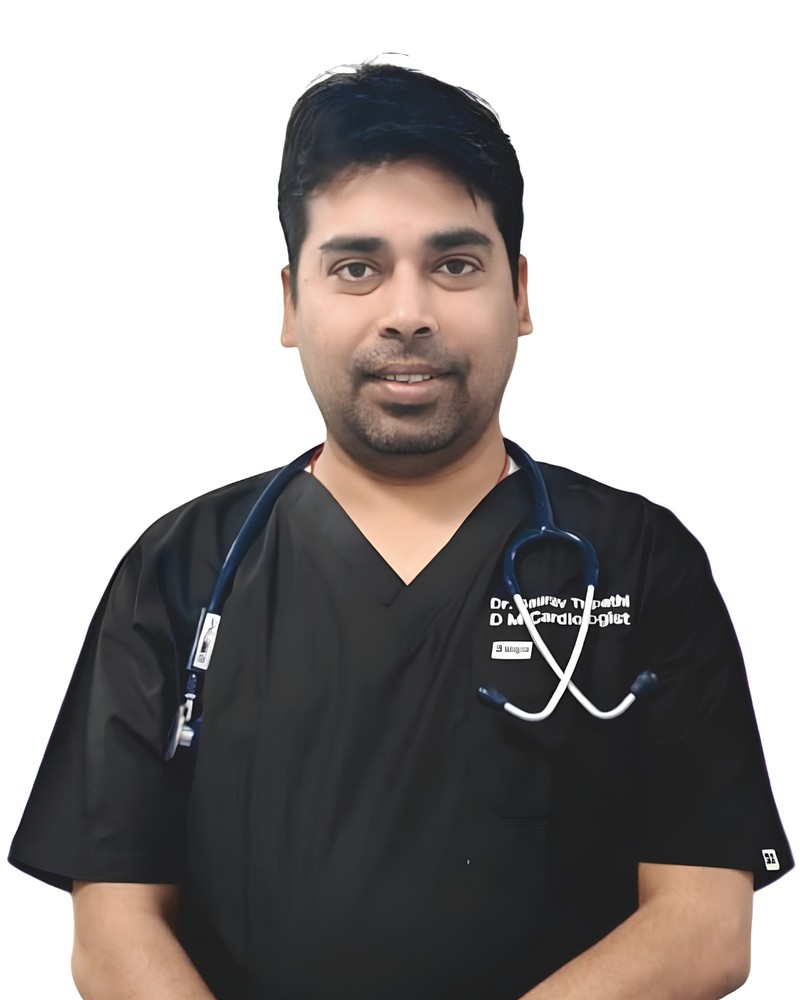
Dr. Gaurav Tripathi
Interventional cardiologist experienced in catheter-based closure and other non-surgical heart procedures.
800 × 1000 px · JPG
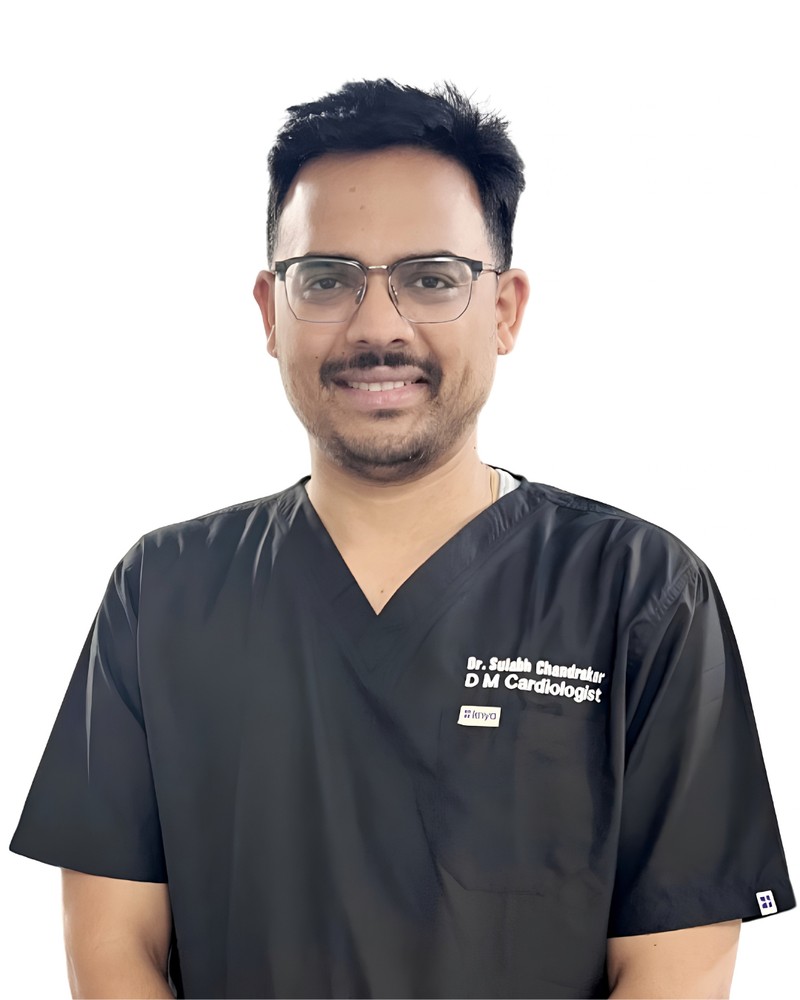
Dr. Sulabh Chandrakar
Performs device closure and structural heart procedures, and guides families through every step for children and adults.
Facilities at Prathmesh Cardiac Institute
Book a Consultation / Procedure Appointment for ASD / VSD Device Closure
Call or WhatsApp us, or request a call back — our team will confirm a time and tell you what to bring. Bring your previous ECG, echo, angiography reports and current medicine list.