
What Is Permanent Pacemaker (PPI)?
A permanent pacemaker is a small device placed under the skin near the collarbone that sends electrical signals to keep the heart beating at a normal rate. Thin wires (leads) connect it to the heart.
Why Is Pacemaker Implantation Done? — Indications
It is done to treat a slow or irregular heartbeat (bradycardia or heart block) that causes dizziness, fainting or tiredness.
Who May Need Pacemaker Implantation?
It is for patients whose heart beats too slowly or skips beats because of an electrical problem.
Types / Variations of Pacemaker Implantation
Single-chamber pacemaker
One lead, usually in the right lower chamber.
Dual-chamber pacemaker
Two leads (upper and lower chamber) — keeps a more natural rhythm between them.
Leadless pacemaker
A tiny capsule placed directly inside the heart, with no wire and no pocket — suitable for selected patients.
Conduction-system pacing
The lead is placed on the heart's natural wiring for a more natural heartbeat, in suitable patients.
Your cardiologist will tell you which type or technique is right for you after reviewing your reports.
Benefits of Pacemaker Implantation
It gives reliable relief from slow-heartbeat symptoms, restores energy, prevents fainting, and has a long battery life of several years.
How Pacemaker Implantation Is Performed
Under local anaesthesia, a small cut is made near the collarbone, leads are passed through a vein to the heart, and the pacemaker is placed under the skin. It takes about 1–2 hours.
Preparation Before Pacemaker Implantation
Preparation includes blood tests and an ECG; blood thinners may be adjusted and a short fast is needed.
Tests Required Before Pacemaker Implantation
- ECG — to record the heart's rhythm on the day
- Holter monitoring, if the slow heartbeat comes and goes
- 2D Echo — to check pumping (EF) and the valves
- Blood tests — haemoglobin, kidney function (creatinine), blood sugar and clotting profile
- Thyroid and other tests to rule out reversible causes
Your doctor will tell you exactly which tests you need — bring all previous reports, CDs and your medicine list.
Anaesthesia / Sedation Used in Pacemaker Implantation
Local anaesthesia below the collarbone, often with mild sedation. You stay awake and comfortable.
How Long Does Pacemaker Implantation Take?
Usually about 1–2 hours.
Hospital Stay / Admission for Pacemaker Implantation
Usually 1–2 days.
Risks & Possible Complications of Pacemaker Implantation
Risks such as minor infection, bleeding or lead displacement are uncommon.
Recovery After Pacemaker Implantation
The hospital stay is short (1–2 days). Avoid heavy movement of that arm for a few weeks, and attend regular device checks.
Aftercare & Precautions After Pacemaker Implantation
- Do not lift the arm on the device side above shoulder level for about 4–6 weeks, and keep the wound dry until it is checked.
- Keep mobile phones and magnets about 15 cm away from the device, and carry your device card (show it at airport security).
- Attend regular device checks — the battery and leads are tested at every visit.
- Take every medicine exactly as prescribed — never stop blood thinners on your own.
- Ask your doctor when it is safe to drive again.
- Keep every follow-up visit and bring your discharge summary and reports.
Success / Expected Outcomes of Pacemaker Implantation
A pacemaker reliably prevents the heart from going too slow. Most patients feel the difference quickly — no more fainting spells, and more energy for daily life. The battery usually lasts several years and is replaced with a short procedure.
When to Seek Medical Help After Pacemaker Implantation
Contact us immediately — or go to the nearest emergency — if you notice any of these after going home:
- Fainting, dizziness, or a very fast or very slow heartbeat
- Fever, or redness, warmth or discharge at the wound
- Continuous hiccups or twitching of the chest or tummy muscles
- Breathlessness, or swelling of the feet that is getting worse
- Swelling or bleeding at the device pocket
Pacemaker Implantation — Questions Patients Ask
Usually several years (often 8–12). It is checked at follow-ups and replaced when needed.
Yes, with normal precautions — keep the phone away from the pacemaker pocket.
A small bump may be felt under the skin, but it is discreet.
At Prathmesh Cardiac Institute, NH-30, Amlidih Road, Deopuri, Raipur. Pacemaker Implantation is planned and performed by our DM Cardiology specialists in our own Cath Lab, with a 24x7 CCU for recovery. Call +91 77778 65621 to book a consultation.
Government health schemes and most insurance policies cover cardiac procedures. The exact cover depends on your scheme or policy, so our team checks it with you before the procedure and explains the costs clearly.
Why Choose Prathmesh Cardiac Institute for Pacemaker Implantation?
Experienced hands, the right equipment and honest advice — the three things that matter most for a safe procedure.
Experienced DM cardiologists
Dr. Gaurav Tripathi and Dr. Sulabh Chandrakar — experienced interventional cardiologists who perform Pacemaker Implantation regularly.
Advanced, modern Cath Lab
3D angiography with IVUS and FFR guidance — the latest equipment for safe, precise procedures.
24x7 emergency & critical care
A fully equipped CCU and an on-call cath lab team, because heart emergencies do not wait for OPD hours.
Transparent pricing & insurance help
Costs are explained clearly before the procedure, and our team helps you check what your insurance or government health scheme covers.
Complete heart care under one roof
ECG, echo, TMT, angiography, procedures and follow-up in one place — from diagnosis to treatment.
Metro-level care, close to home
The same technology and technique used in metro cardiac centres — without travelling far with a sick patient.
Specialists & Facilities Available
Your procedure is planned and performed by our senior DM Cardiology consultants. You can read their full profiles before your visit.
800 × 1000 px · JPG
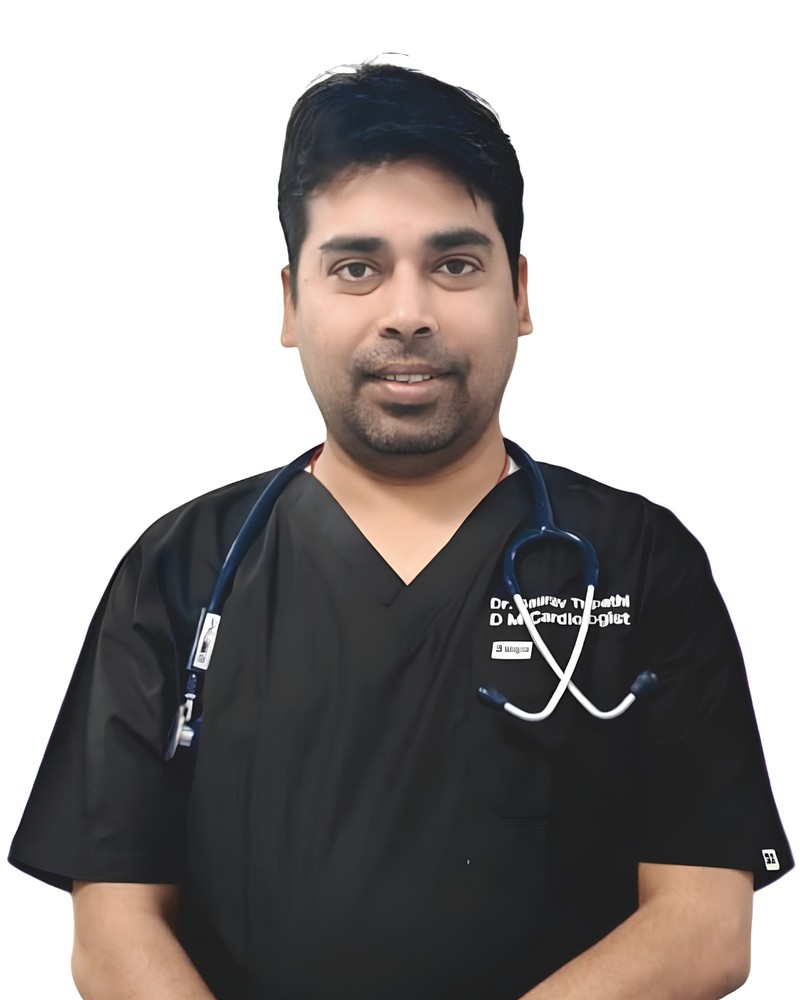
Dr. Gaurav Tripathi
Interventional cardiologist who assesses rhythm problems and plans device therapy alongside the full heart work-up.
800 × 1000 px · JPG
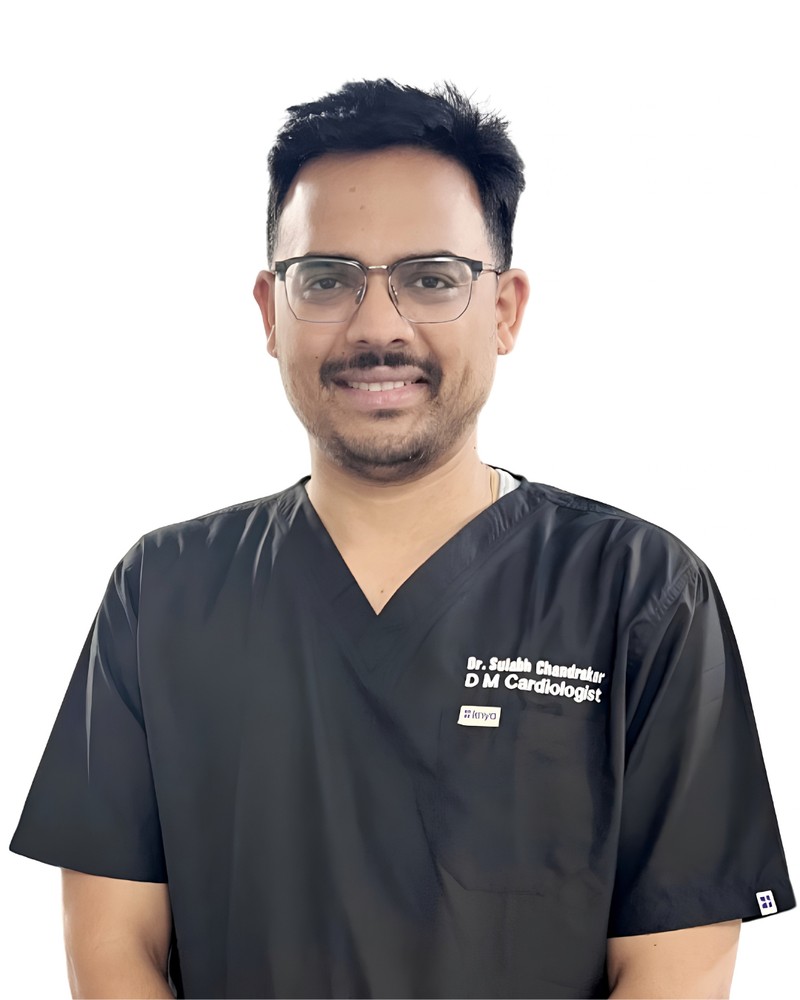
Dr. Sulabh Chandrakar
Focuses on rhythm problems, device implantation (pacemaker, ICD, CRT) and long-term device follow-up.
Facilities at Prathmesh Cardiac Institute
Book a Consultation / Procedure Appointment for Pacemaker Implantation
Call or WhatsApp us, or request a call back — our team will confirm a time and tell you what to bring. Bring your previous ECG, echo, angiography reports and current medicine list.