
What Is EPS & RF Ablation?
EPS (Electrophysiology Study) maps the heart’s electrical system to find the source of an abnormal rhythm. RF (Radiofrequency) Ablation then uses heat energy through a catheter to destroy the tiny area causing the problem.
Why Is EPS & RF Ablation Done? — Indications
It is done to diagnose and cure fast or irregular heartbeats (arrhythmias) such as SVT, atrial flutter, or some types of atrial fibrillation.
Who May Need EPS & RF Ablation?
It is for patients with repeated palpitations or proven arrhythmias that are not controlled by medicines.
Types / Variations of EPS & RF Ablation
Diagnostic EPS
Only the study — to find the cause of palpitations or fainting.
Ablation for SVT (AVNRT / WPW)
The most common ablation — usually a permanent cure.
Atrial flutter ablation
A line of ablation that blocks the flutter circuit.
Ablation for atrial fibrillation or VT
For selected patients — often with 3D mapping systems.
Your cardiologist will tell you which type or technique is right for you after reviewing your reports.
Benefits of EPS & RF Ablation
It can permanently cure many arrhythmias, reducing or ending the need for lifelong medicines.
How EPS & RF Ablation Is Performed
Catheters are passed through the leg veins to the heart; the rhythm is studied (EPS) and then the problem spot is treated with radiofrequency energy (ablation). It is done in the cath lab, usually awake or under light sedation.
Preparation Before EPS & RF Ablation
Preparation includes ECG or Holter monitoring and blood tests; some medicines are stopped before the test and a fast is needed.
Tests Required Before EPS & RF Ablation
- ECG — to record the heart's rhythm on the day
- Holter monitoring or an ECG recorded during palpitations
- 2D Echo — to check pumping (EF) and the valves
- Blood tests — haemoglobin, kidney function (creatinine), blood sugar and clotting profile
- Thyroid test
Your doctor will tell you exactly which tests you need — bring all previous reports, CDs and your medicine list.
Anaesthesia / Sedation Used in EPS & RF Ablation
Local anaesthesia at the groin with light sedation. You may be kept awake so the rhythm can be triggered and studied.
How Long Does EPS & RF Ablation Take?
Usually 1–3 hours, depending on the type of rhythm problem.
Hospital Stay / Admission for EPS & RF Ablation
Often the same day or the next day.
Risks & Possible Complications of EPS & RF Ablation
It is generally safe, with a small risk of bleeding, blood-vessel injury or rhythm problems.
Recovery After EPS & RF Ablation
The hospital stay is short (often same or next day) with a quick return to normal activity.
Aftercare & Precautions After EPS & RF Ablation
- Keep the puncture site clean and dry for 2–3 days; a little bruising is normal.
- Avoid heavy lifting and strenuous work for the first few days, as advised.
- Take only the medicines your doctor continues — many patients can stop rhythm medicines after successful ablation.
- Keep every follow-up visit and bring your discharge summary and reports.
Success / Expected Outcomes of EPS & RF Ablation
For common fast heartbeats such as SVT and typical atrial flutter, ablation has a very high success rate and is often a permanent cure. Results for atrial fibrillation and VT vary, and your doctor will explain your chances.
When to Seek Medical Help After EPS & RF Ablation
Contact us immediately — or go to the nearest emergency — if you notice any of these after going home:
- Palpitations coming back like before
- Fainting, dizziness, or a very fast or very slow heartbeat
- Chest pain, pressure or tightness — especially at rest
- Bleeding, swelling or increasing pain at the puncture site — press firmly on it and call us
- Breathlessness, or swelling of the feet that is getting worse
EPS & RF Ablation — Questions Patients Ask
For many arrhythmias (such as SVT) the success rate is very high and often curative.
It is done with sedation and local anaesthesia and is usually well tolerated.
Often not, or far fewer. Your doctor will advise after the procedure.
At Prathmesh Cardiac Institute, NH-30, Amlidih Road, Deopuri, Raipur. EPS & RF Ablation is planned and performed by our DM Cardiology specialists in our own Cath Lab, with a 24x7 CCU for recovery. Call +91 77778 65621 to book a consultation.
Government health schemes and most insurance policies cover cardiac procedures. The exact cover depends on your scheme or policy, so our team checks it with you before the procedure and explains the costs clearly.
Why Choose Prathmesh Cardiac Institute for EPS & RF Ablation?
Experienced hands, the right equipment and honest advice — the three things that matter most for a safe procedure.
Experienced DM cardiologists
Dr. Gaurav Tripathi and Dr. Sulabh Chandrakar — experienced interventional cardiologists who perform EPS & RF Ablation regularly.
Advanced, modern Cath Lab
3D angiography with IVUS and FFR guidance — the latest equipment for safe, precise procedures.
24x7 emergency & critical care
A fully equipped CCU and an on-call cath lab team, because heart emergencies do not wait for OPD hours.
Transparent pricing & insurance help
Costs are explained clearly before the procedure, and our team helps you check what your insurance or government health scheme covers.
Complete heart care under one roof
ECG, echo, TMT, angiography, procedures and follow-up in one place — from diagnosis to treatment.
Metro-level care, close to home
The same technology and technique used in metro cardiac centres — without travelling far with a sick patient.
Specialists & Facilities Available
Your procedure is planned and performed by our senior DM Cardiology consultants. You can read their full profiles before your visit.
800 × 1000 px · JPG
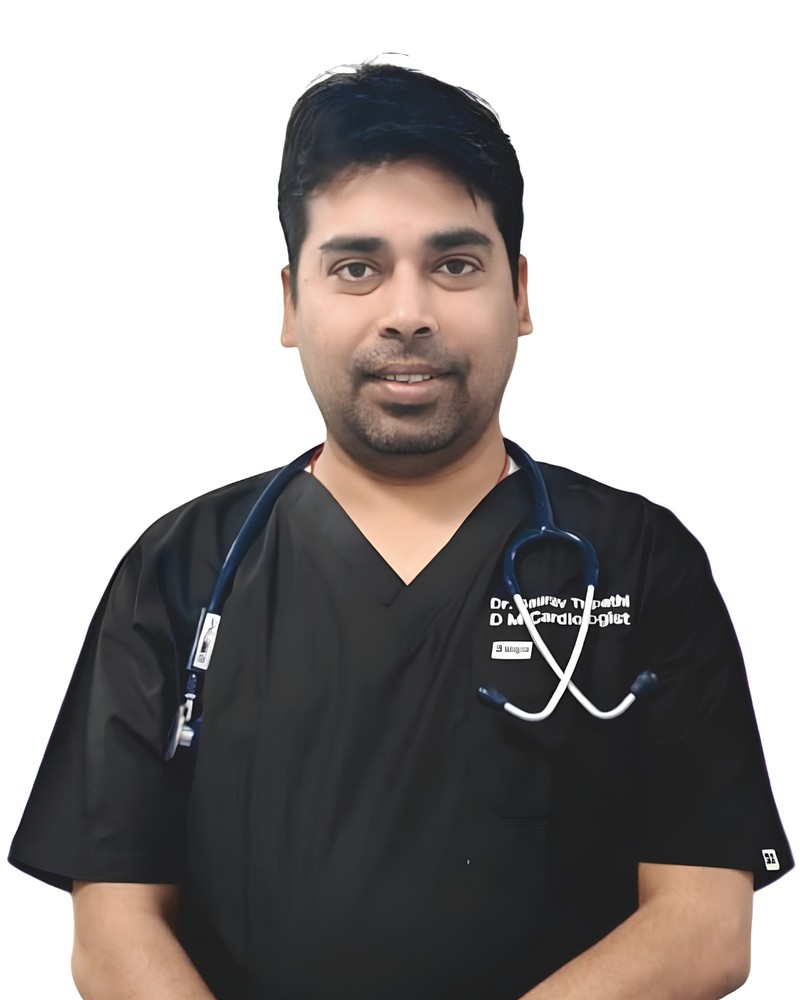
Dr. Gaurav Tripathi
Interventional cardiologist who assesses rhythm problems and plans device therapy alongside the full heart work-up.
800 × 1000 px · JPG
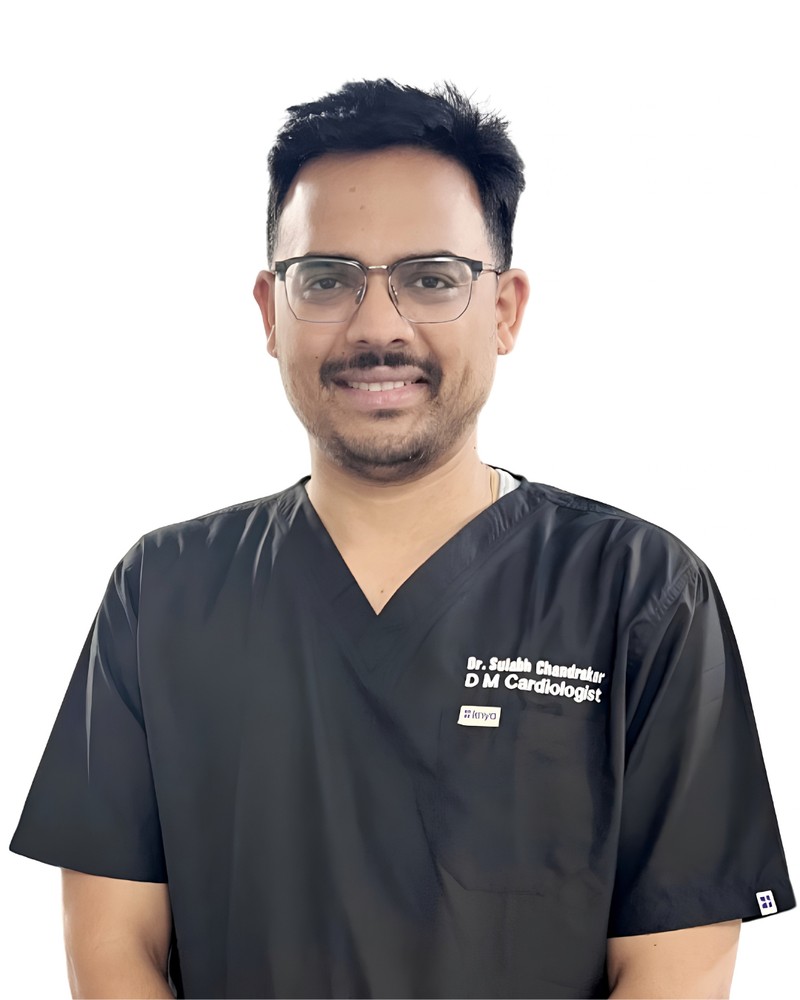
Dr. Sulabh Chandrakar
Focuses on rhythm problems, device implantation (pacemaker, ICD, CRT) and long-term device follow-up.
Facilities at Prathmesh Cardiac Institute
Book a Consultation / Procedure Appointment for EPS & RF Ablation
Call or WhatsApp us, or request a call back — our team will confirm a time and tell you what to bring. Bring your previous ECG, echo, angiography reports and current medicine list.